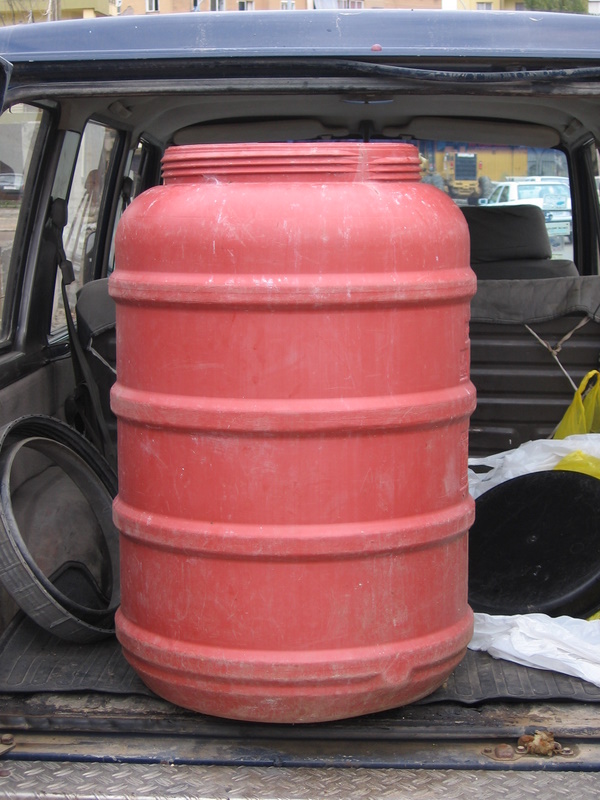
This container, filled with grapes from our house, provided the perfect environment for fermentation.
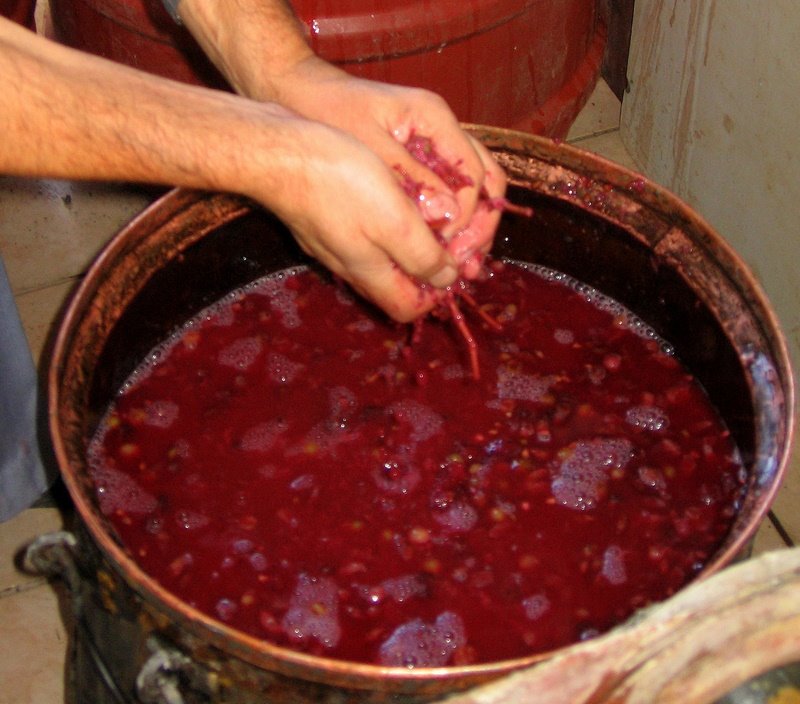
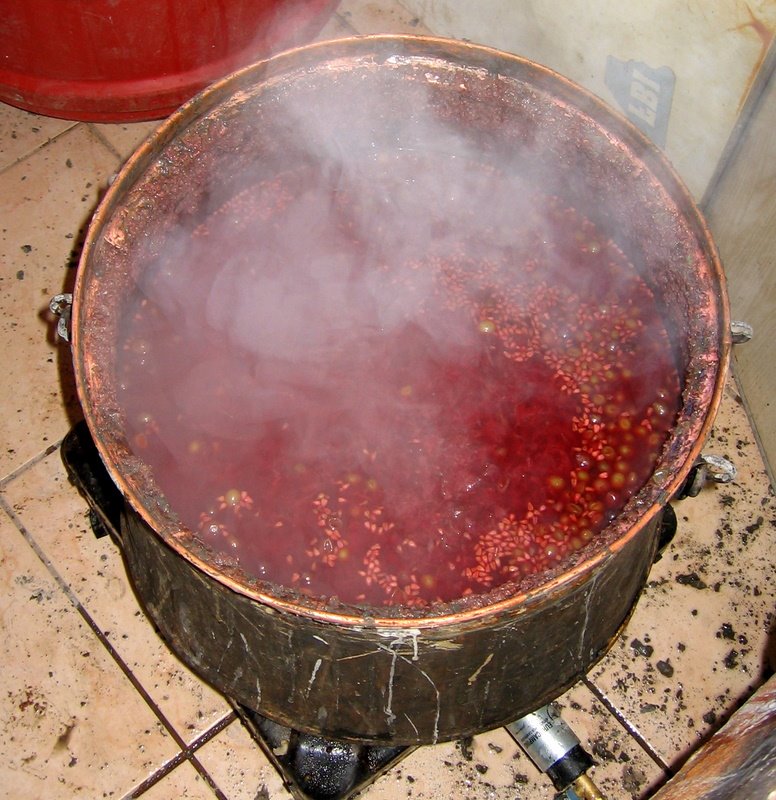
 After two weeks, the grapes were ready to be turned into raki. First they were loaded into the still...
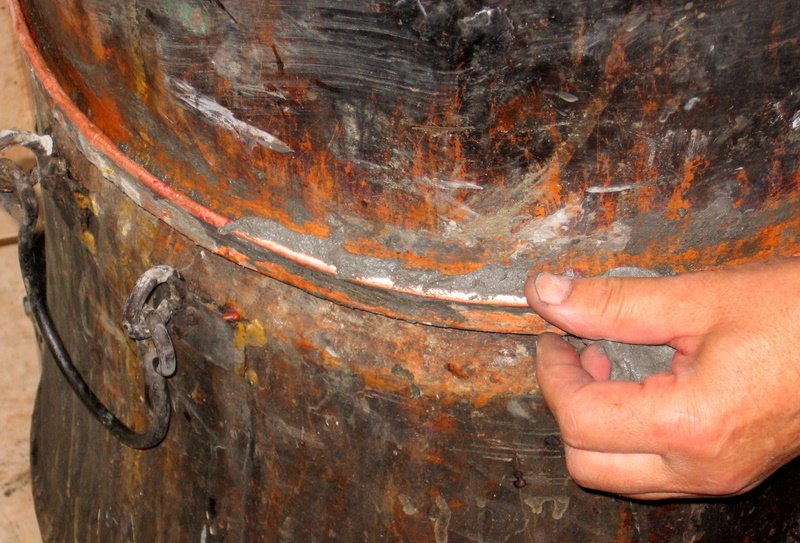
 ...then the still was sealed using a paste made from ash and flour.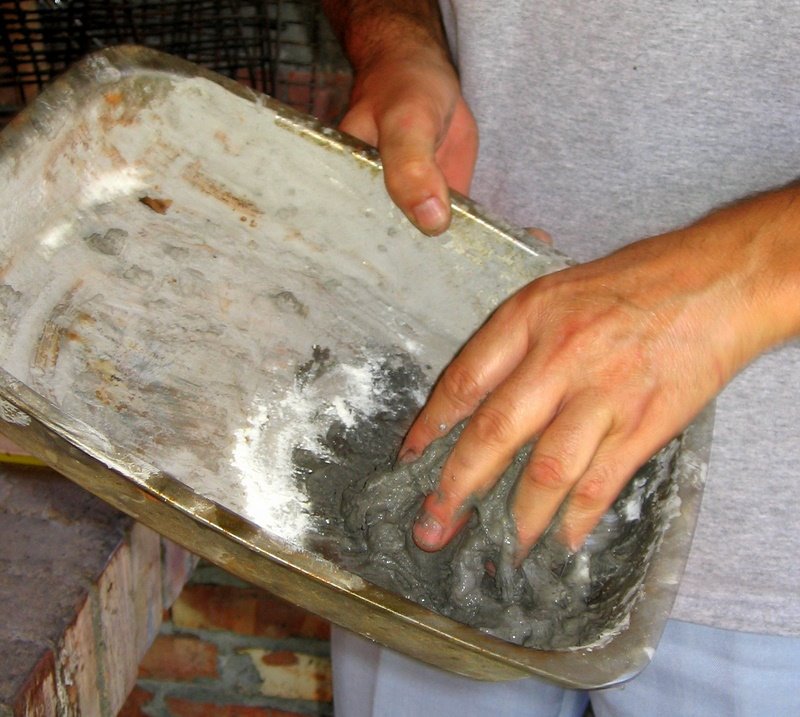
 The still is then heated. Distillation works because alcohol boils at a lower temperature than water. The steam that rises to the top of the sealed still is the result of the alcohol boiling. It has nowhere to go except into the arm that is attached to the top of the still. The steam passes down the arm which is immersed in cold water. The water lowers the temperature inside the arm so that the steam condenses back into liquid.
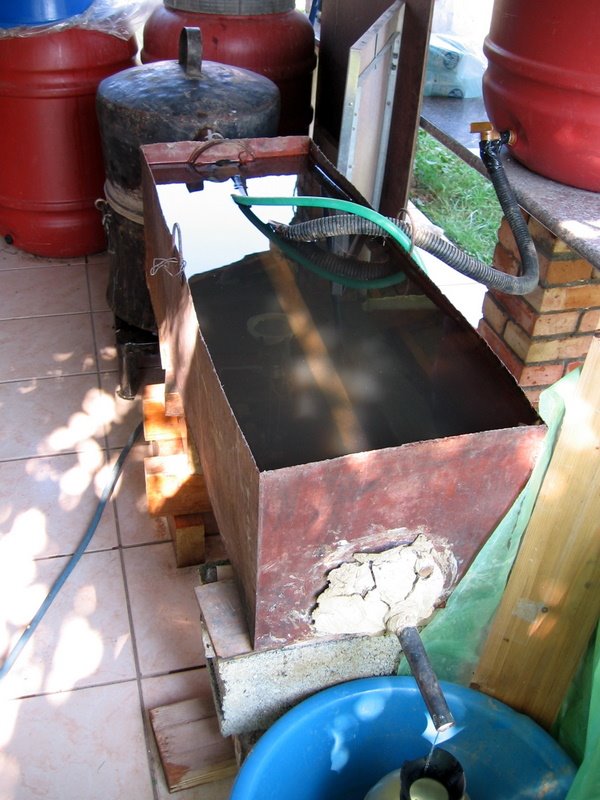 We wait for the newly made raki to appear...
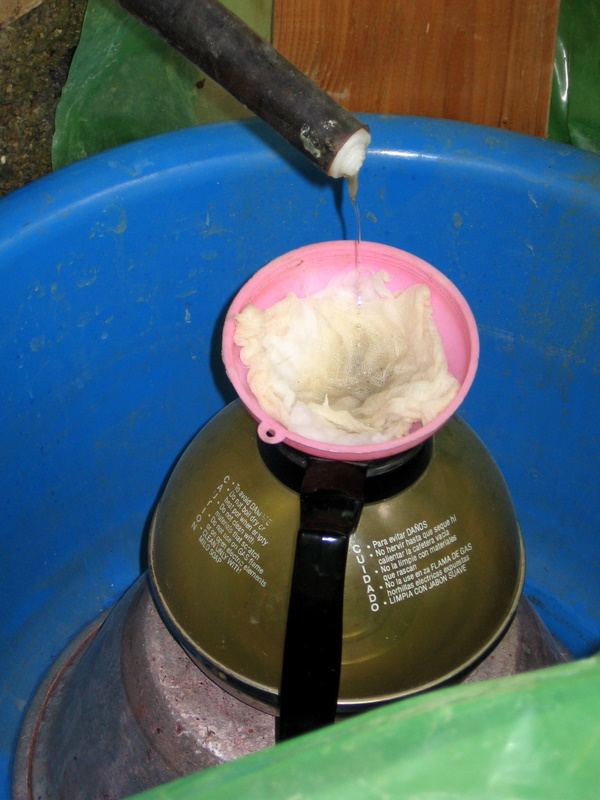
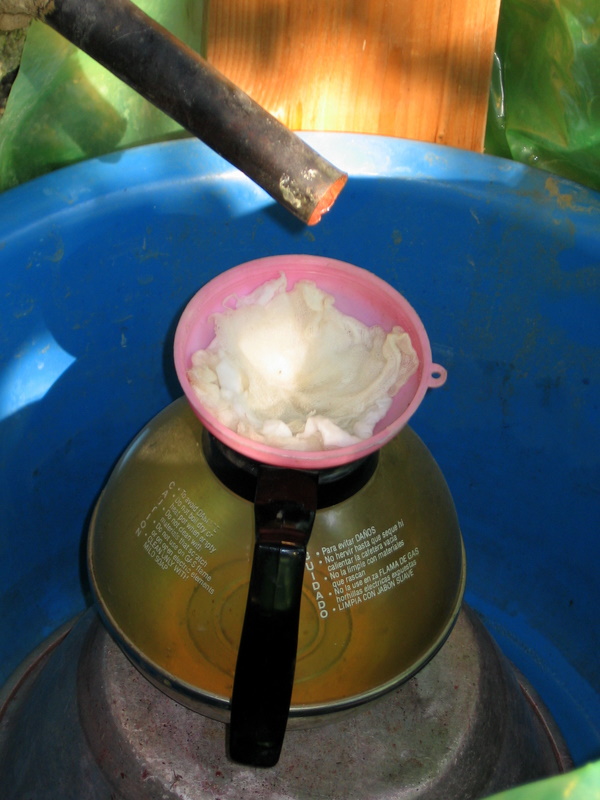 ...which it does as the temperature rises.
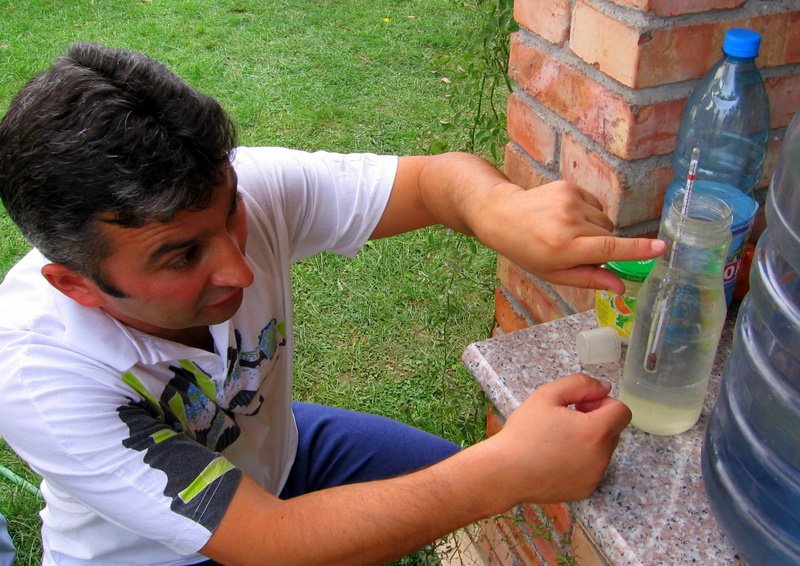
 After collecting the newly made raki, its strength can be measured.
 The still is unsealed...
 ...and the leftovers...
 ...go to the garden to fertilise the grapes for next year.
 We now have 12 litres of our own raki thanks to Qemal, seen here sampling the make.
Comments
arlinda
Thanks for reminding me of an age old process, my grandfather still makes raki this way :) :)
It is strong stuff - stronger than normal - but it's not bad and it gets better with a little bit of warmth.
If anyone is coming to town or is in town you are welcome to try it.