Adrian White, an Analytic Social Psychologist at the University of Leicester in England, has produced The World Map of Happiness
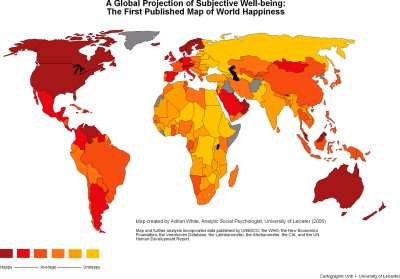
White argues that the three key factors in producing happiness are health, wealth and education: "When people are asked if they are happy with their lives, people in countries with good healthcare, a higher GDP per capita, and access to education were much more likely to report being happy."
Given that Albania scores poorly in all three areas it is not surprising that the country only manages 157th place (out of 178) on the 'World Happiness League Table'.
Ireland is in a very impressive 11th place, while the UK comes a less than inspiring 41st. But we are still ahead of the French (62nd) which is the important thing. The happiest people in the world are the Danes.
Mr White obviously put a lot of time and effort into analysing data sources, but I can't help thinking that he knows that this is really just a bit of fun. So enjoy the interactive map and don't forget to send gloating emails to all your happiness deprived friends from other countries.

White argues that the three key factors in producing happiness are health, wealth and education: "When people are asked if they are happy with their lives, people in countries with good healthcare, a higher GDP per capita, and access to education were much more likely to report being happy."
Given that Albania scores poorly in all three areas it is not surprising that the country only manages 157th place (out of 178) on the 'World Happiness League Table'.
Ireland is in a very impressive 11th place, while the UK comes a less than inspiring 41st. But we are still ahead of the French (62nd) which is the important thing. The happiest people in the world are the Danes.
Mr White obviously put a lot of time and effort into analysing data sources, but I can't help thinking that he knows that this is really just a bit of fun. So enjoy the interactive map and don't forget to send gloating emails to all your happiness deprived friends from other countries.
Comments
That's how reliable this data is.